Summer Pasta Salad
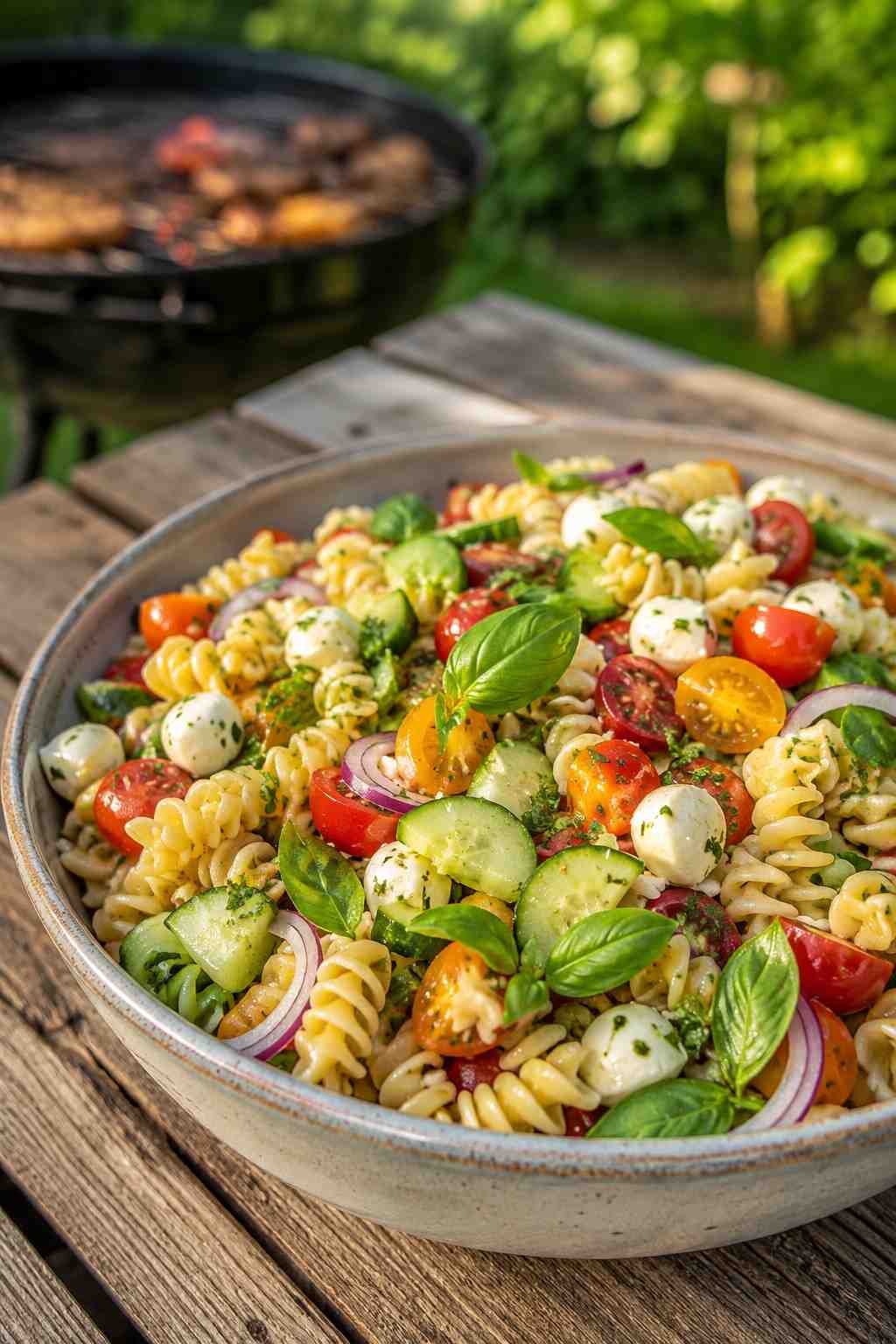
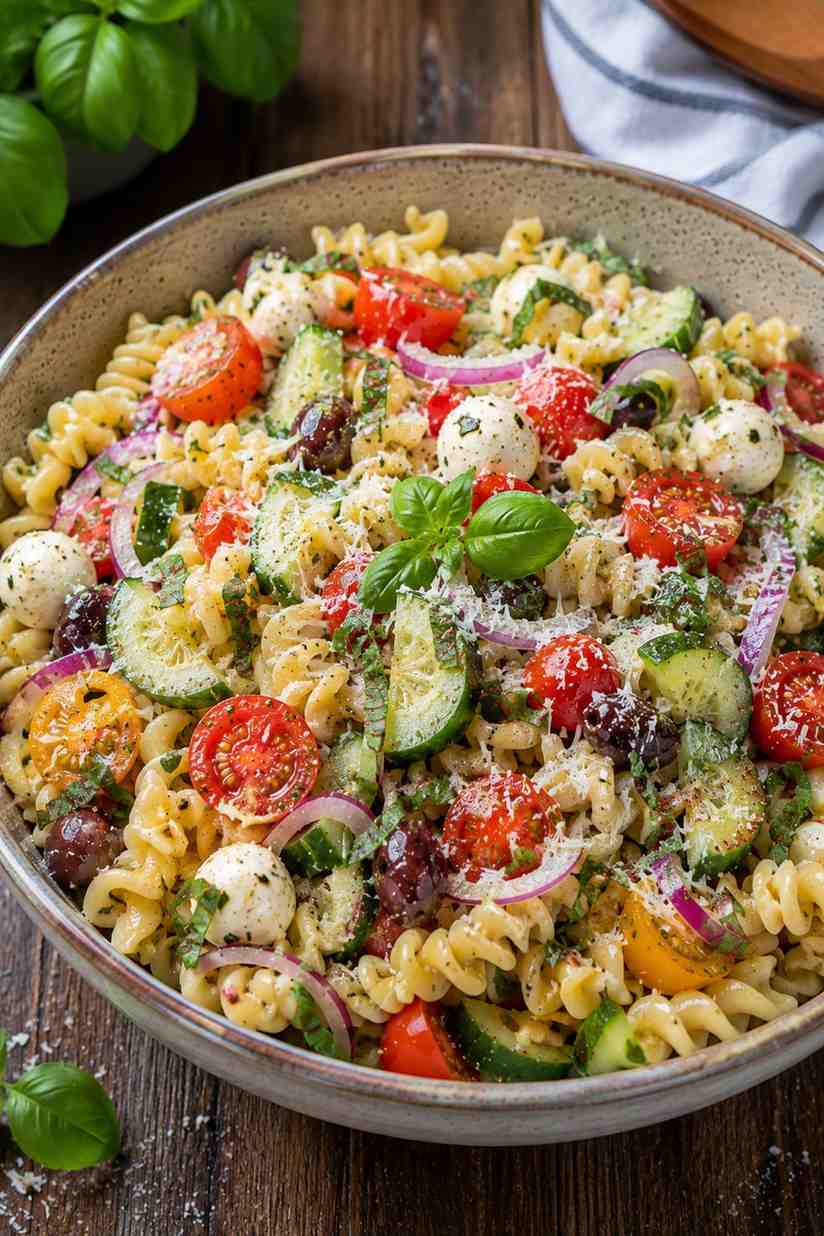
Cold, crunchy, loaded with vegetables, and dressed in something that isn’t mayonnaise. This is the pasta salad I actually bring to a barbecue, not the one that sits untouched at the end of the table.
Why I keep making this salad
For a long time, pasta salad meant one thing to me: a mayonnaise-heavy tub sitting at the end of a potluck table, usually a little warm, usually the last thing anyone reached for. It wasn’t until a friend brought a completely different version to a Fourth of July cookout — bright red tomatoes, a sharp vinaigrette, no mayo in sight — that I realized the whole category had been sitting under a bad reputation it didn’t deserve.
That salad was gone within twenty minutes, well before the burgers were even off the grill. I asked for the recipe, made it myself the following weekend, and started tweaking it almost immediately — a little more vinegar here, a handful of olives there, mozzarella instead of feta one week because it’s what I had. What I landed on is the version below, and it’s the one I now bring to almost every barbecue, picnic, and potluck I’m invited to between June and September.
Part of what makes it worth repeating is how little it demands of you. There’s no oven running for an hour, no last-minute plating, nothing that needs to be served piping hot. You make it, you chill it, and it actually gets better the longer it sits — which makes it one of the few dishes that’s genuinely easier to bring somewhere than to eat at home the moment it’s ready.
This isn’t a fussy, restaurant-plated pasta salad. It’s the one that travels well in a cooler, holds up in the sun for an afternoon, and disappears fast once it hits the table.
Why this version actually works
There are a handful of small decisions in this recipe that matter more than they look like they should. None of them take much extra effort, but skipping them is usually why homemade pasta salad turns out gummy, bland, or drowning in dressing by the time it’s served.
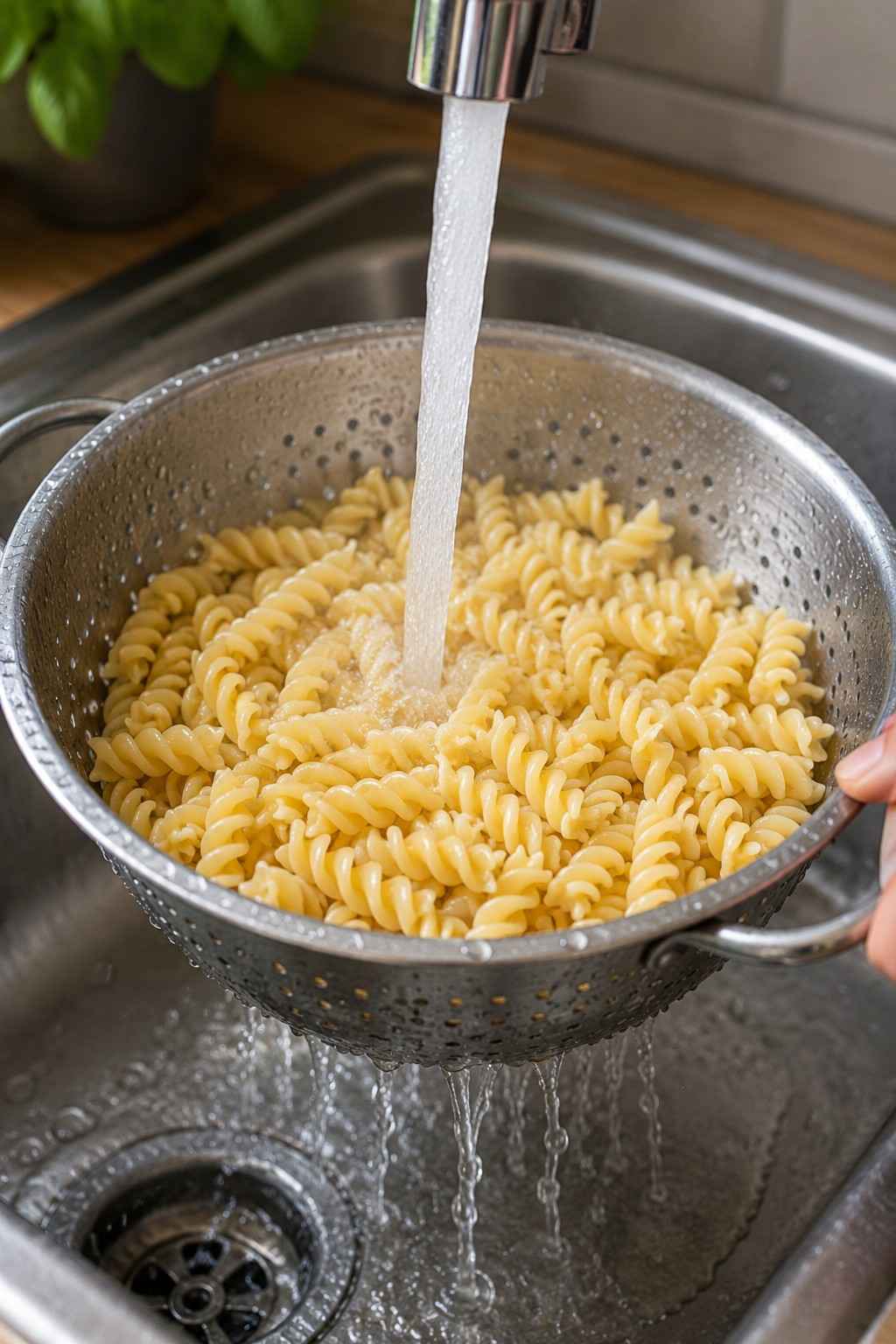
First, the pasta is rinsed under cold water immediately after draining. This stops the cooking right away and washes off the surface starch that would otherwise make the noodles stick together into a solid clump as they cool. It takes about ten seconds and it’s the single biggest reason this salad stays loose and easy to toss instead of turning into a brick in the fridge.
Second, the dressing is genuinely acidic — a full three tablespoons of red wine vinegar against half a cup of oil. Cold food mutes flavor, so a dressing that tastes perfectly balanced when you first whisk it together often tastes flat by the time the salad has chilled for an hour. Building in extra acidity up front means the salad still tastes bright and punchy straight out of the fridge.
Third — and this is the one people skip most often — the vegetables go in raw and are cut with some real size to them. A lot of pasta salads drown their vegetables in tiny dice until they disappear into the noodles. Keeping the cucumber, pepper, and tomato in generous pieces means every forkful still has something crisp and fresh to bite into, instead of everything blurring into the same soft texture.
Ingredient notes
Here’s a closer look at what goes into this dish and why, along with a few substitutions if you’re missing something or just working with what’s in the fridge.
Pasta shape
Short, ridged shapes like fusilli or rotini are the best choice here because the ridges and curls actually hold onto the dressing instead of letting it slide off the way a smooth shape like penne can. Farfalle (bowties) and orecchiette also work well. Avoid long noodles like spaghetti — they’re difficult to toss evenly and don’t hold dressing the same way.
Cherry tomatoes
Halved cherry or grape tomatoes hold their shape and stay juicy without turning the whole salad watery the way larger, diced tomatoes tend to. If tomatoes aren’t in season or don’t look great, a well-drained can of quartered artichoke hearts is a surprisingly good stand-in for that same pop of brightness.
Mozzarella
Mini mozzarella balls, sometimes labeled bocconcini or pearls, add a soft, milky bite that balances the acidity of the dressing. If you can’t find them, cubed regular mozzarella works just as well — just cut it small enough to distribute evenly through the salad. Feta is a great substitute if you want something sharper and saltier instead.
Kalamata olives
These bring a briny depth that a lot of pasta salads are missing entirely. If you’re not an olive person, they’re easy to leave out, but I’d encourage trying them at least once — they do a lot of work in rounding out the flavor without tasting overtly “olive-y” once mixed through the salad.
Red wine vinegar
This is the backbone of the dressing, and it’s worth not swapping it for something milder. If you only have white wine vinegar or apple cider vinegar on hand, either will work in a pinch, but the flavor will be a touch less rounded than the original.
Fresh basil
Torn, not chopped — tearing bruises the leaves less, which keeps them from browning as quickly once mixed into the salad. Add it close to serving time if you’re making the salad ahead, since basil is the first thing to wilt and darken once it’s dressed.
Equipment
Nothing specialized here. You’ll want a large pot for the pasta, a colander, a large mixing bowl for tossing everything together, a small bowl or jar for the dressing, a whisk, and a sharp knife for the vegetables. A salad spinner is handy if your vegetables need drying after washing, but a clean towel does the job just as well.
Summer Pasta Salad
Here’s the full recipe, written the way I actually make it — including the order-of-operations choices that keep the pasta from clumping and the vegetables from turning soft before it ever makes it to the table.
Summer Pasta Salad
Serves 6 · Prep 20 min · Cook 10 min · Total 1 hr (incl. chilling)
Ingredients
Method
-
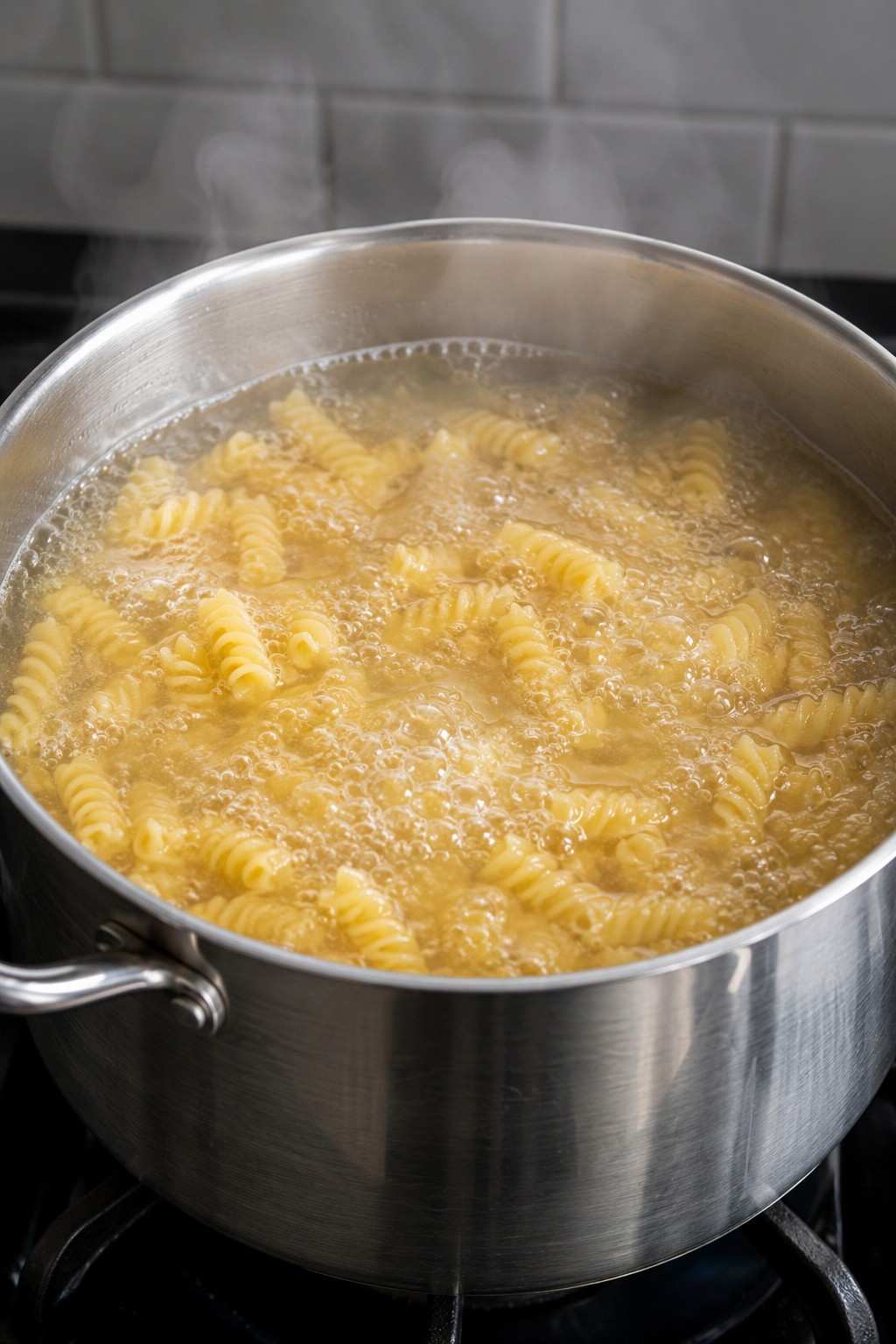
Cook the pasta. Bring a large pot of well-salted water to a boil and cook the pasta until al dente according to the package directions.
-
Cool the pasta. Drain the pasta and rinse it under cold water until fully cooled, tossing occasionally so it doesn’t clump. Drain well and set aside.
-
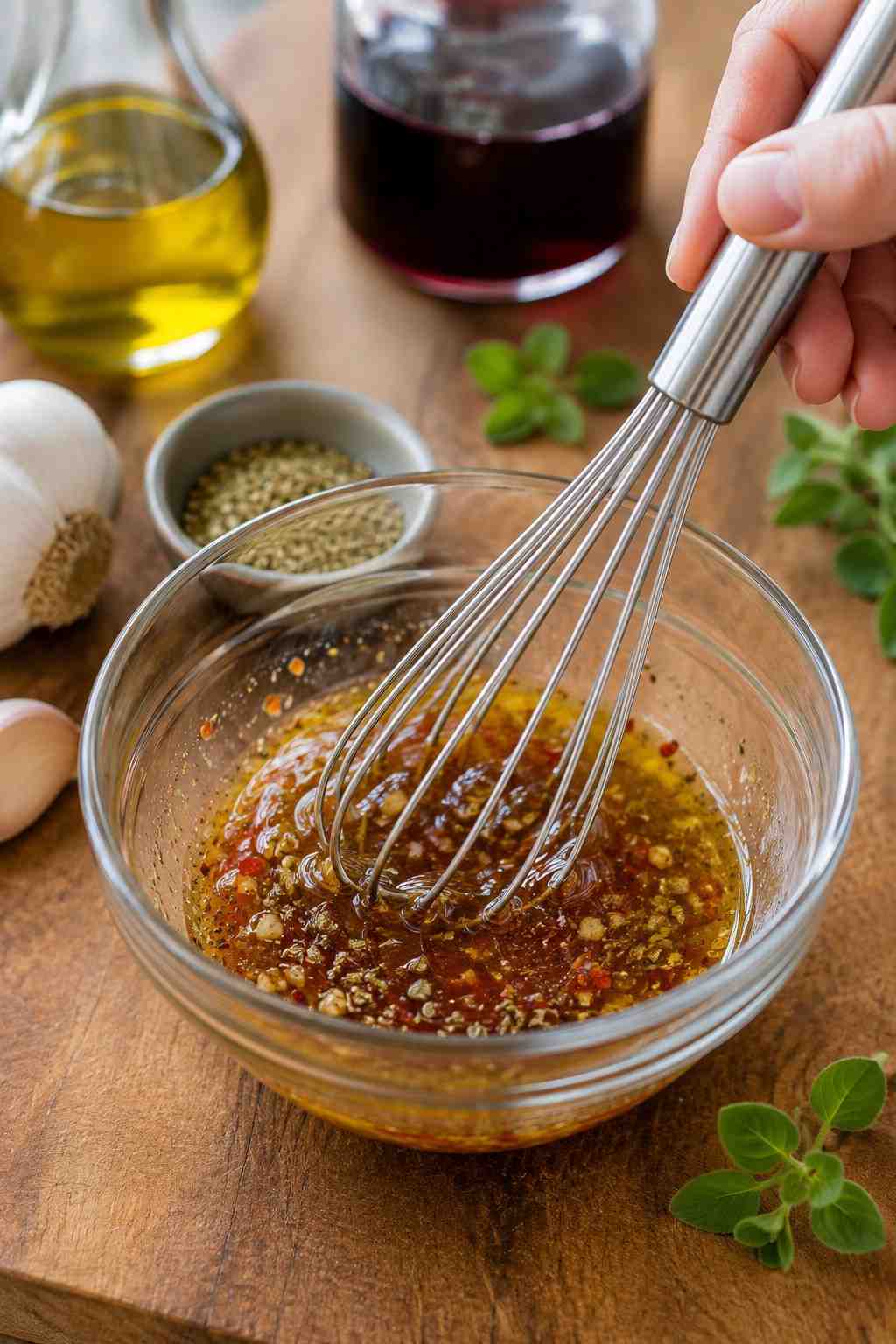
Make the dressing. In a small bowl or jar, whisk together the olive oil, red wine vinegar, garlic, oregano, salt, and pepper until well combined.
-
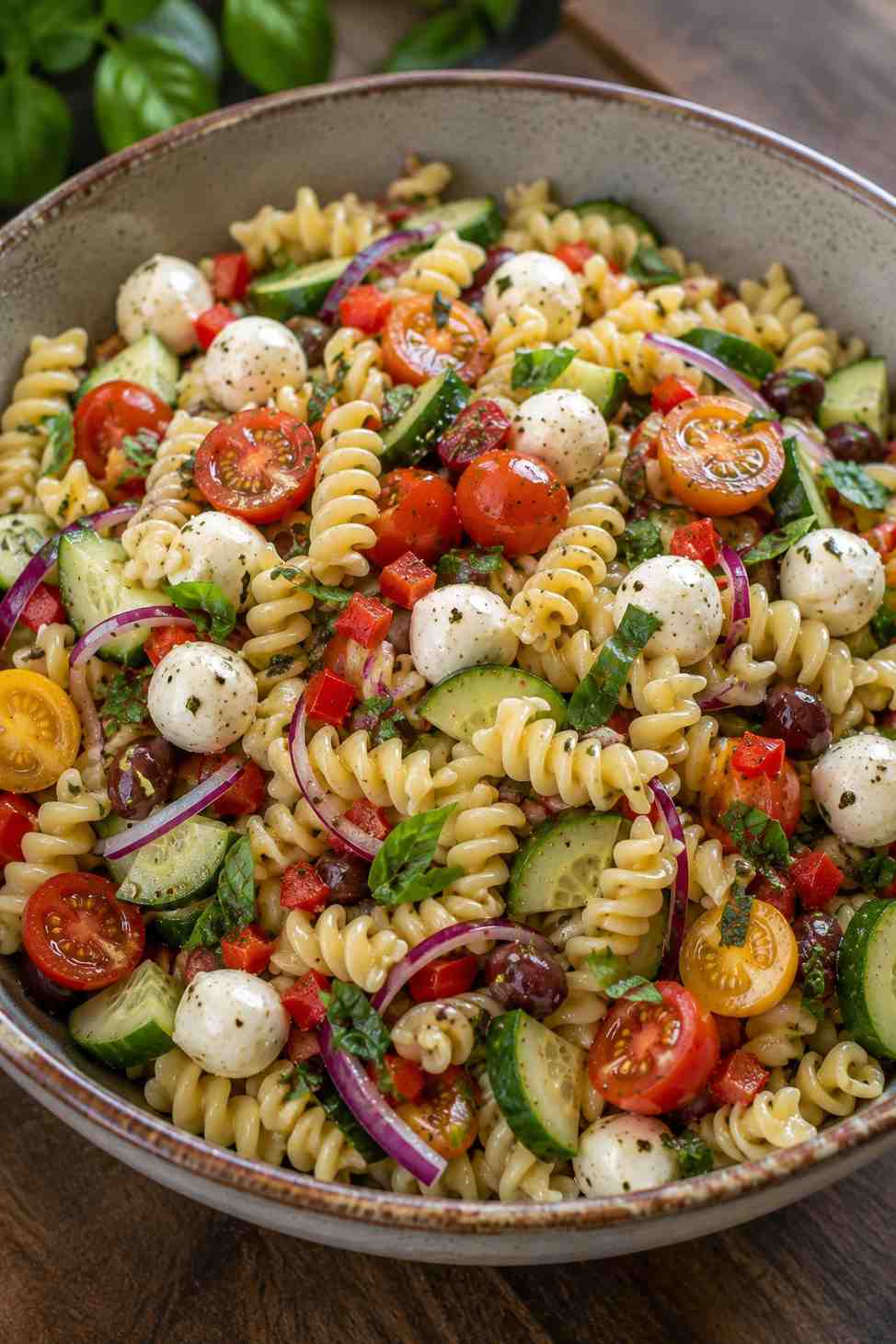
Combine everything. In a large bowl, combine the cooled pasta with the cherry tomatoes, cucumber, bell pepper, red onion, olives, mozzarella, and basil.
- Dress and toss. Pour the dressing over the salad and toss thoroughly until everything is evenly coated.
-
Chill and serve. Sprinkle with parmesan, cover, and refrigerate for at least 30 minutes. Give it one more toss, taste and adjust the salt if needed, then serve cold.
Tips for success
A few things I’ve learned the hard way over the years of bringing this to every summer gathering:
- Rinse the pasta right away. Don’t let it sit in the colander cooling on its own — rinse it under cold water immediately to stop the cooking and wash off excess starch, or it will clump together as it cools.
- Salt the pasta water generously. This is your only real chance to season the pasta itself. If the water tastes bland, the noodles will taste bland too, no matter how good the dressing is.
- Dress it while the pasta is still slightly damp. A little residual moisture helps the dressing cling to the noodles instead of pooling at the bottom of the bowl.
- Taste again before serving. Cold food mutes flavor, so a salad that tasted perfectly seasoned when you made it can taste flat after an hour in the fridge. A pinch more salt or a splash more vinegar right before serving usually fixes it.
- Add delicate ingredients last. Basil and any soft cheese are best added close to serving time if you’re making this well ahead, so they don’t wilt or discolor while the salad sits.
Variations
Once you’ve made the base recipe a couple of times, it’s an easy one to bend depending on what’s in season or what you have sitting in the fridge.
- Greek pasta salad: Swap the mozzarella for feta, add diced cucumber and extra olives, and finish with a little dried mint for a Greek-leaning version.
- Chicken pasta salad: Add two cups of diced or shredded cooked chicken to turn this from a side dish into a full, protein-packed dinner.
- Caprese pasta salad: Lean into the tomato-mozzarella-basil combination by adding extra tomatoes and a drizzle of balsamic glaze just before serving.
- Spicy version: Whisk a pinch of red pepper flakes or a spoonful of chili crisp into the dressing for some heat.
- Vegan version: Skip the mozzarella and parmesan, or replace them with a plant-based alternative, and use a good pinch of nutritional yeast in the dressing for a savory boost.
- Grain-free version: Swap the pasta for cooked and cooled chickpea or lentil pasta for a version with more protein and fiber built in.
Storage and make-ahead
This is one of the rare salads that genuinely improves with a little time in the fridge, which makes it an easy one to prep ahead of a party or a busy week.
Fully assembled, the salad keeps well in an airtight container in the fridge for up to four days. The pasta will continue to absorb some of the dressing as it sits, so it’s worth keeping a small amount of extra dressing on hand to refresh it before serving leftovers. If you’re making it more than a day ahead, hold back the basil and any extra parmesan and add them just before serving so they stay fresh and don’t discolor.
This salad is not a good candidate for freezing — the vegetables lose their crispness and turn watery once thawed, and the pasta texture suffers as well. It’s best made fresh within the same week you plan to eat it.
What to serve alongside it
On its own, this salad is substantial enough to work as a light lunch, especially with the mozzarella. But if you’re serving it as part of a bigger spread, a few things pair naturally:
- Grilled chicken, sausages, or burgers straight off the barbecue, since the acidity in the dressing cuts nicely through richer grilled meats.
- A simple green salad with a light vinaigrette, if you want something even lighter alongside it.
- Crusty bread or garlic bread for scooping up any extra dressing left in the bowl.
- A chilled glass of rosé or a crisp white wine, like a Pinot Grigio, if you’re serving this for a dinner rather than a casual picnic.
Frequently asked questions
Can I make pasta salad the night before?
Yes, and it’s actually better that way — the flavors have more time to come together. Just hold back the basil and any extra parmesan until right before serving so they stay bright and fresh instead of wilting in the fridge overnight.
Why does my pasta salad taste bland after it’s been in the fridge?
Cold food mutes flavor, and the pasta soaks up a good amount of the dressing as it sits, leaving less behind to coat everything else. Taste it before serving and add a splash more vinegar, olive oil, or a pinch of salt to wake the flavors back up.
How do I keep the pasta from clumping together?
Rinse the cooked pasta under cold water right after draining, both to stop it cooking and to wash away the excess surface starch that causes clumping. Tossing it with a portion of the dressing while it’s still slightly damp also helps keep the noodles separate.
Can I add protein to make it a full meal?
Absolutely. Grilled chicken, shrimp, canned chickpeas, or diced salami are all easy additions that turn this from a side dish into a complete summer dinner without changing much else about the recipe.
What pasta shape works best for pasta salad?
Short, ridged shapes like fusilli, rotini, or farfalle hold onto the dressing far better than smooth or long shapes like penne or spaghetti. As noted in the ingredients section above, the ridges and curls are what keep the salad from tasting watery or under-dressed.
Can I make this salad ahead of time for a party?
Yes — this is one of the easiest make-ahead dishes for a party. Prep everything up to a day in advance, keep the basil and parmesan separate, and give it a final toss right before serving so it looks and tastes freshly made.
How many calories are in a serving of summer pasta salad?
This recipe comes out to roughly 410 calories per serving, based on six servings total, including the pasta, dressing, mozzarella, and parmesan. That number will shift depending on how much dressing and cheese you use.