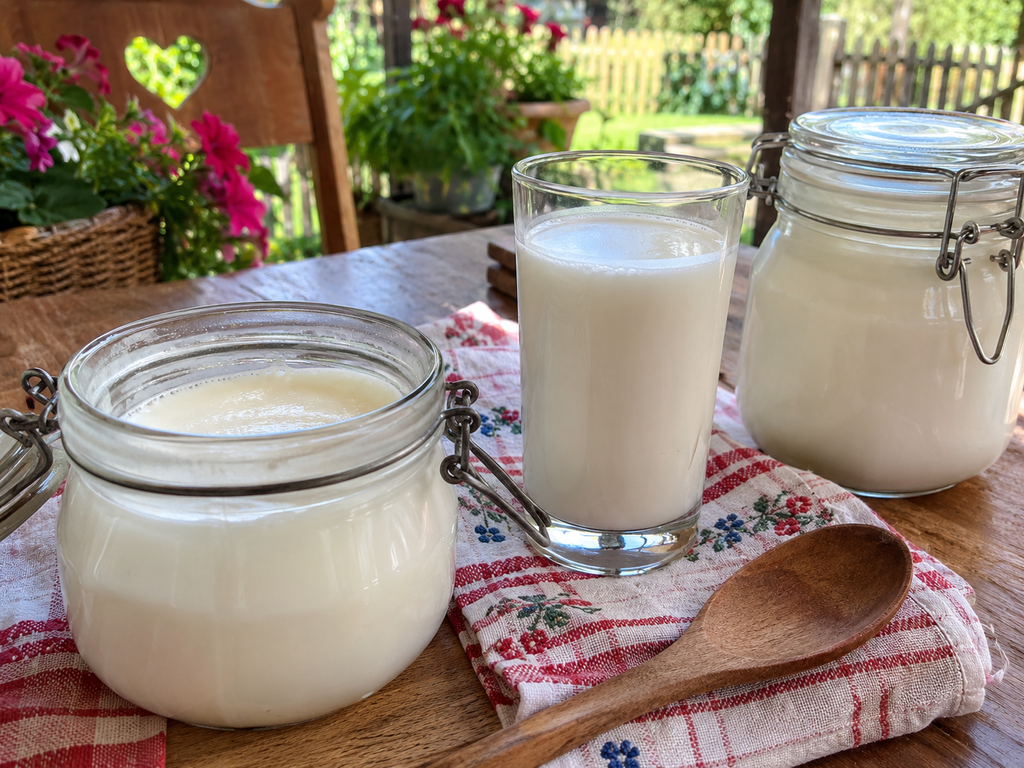
Thick, Creamy Yogurt You Can Make Without a Machine
Yogurt is a daily staple across the Balkans, eaten for breakfast, served beside savory pies like burek, and stirred with water and a pinch of salt into a cooling drink called ayran. Homemade yogurt is simple to make and needs only two ingredients: milk and a spoonful of yogurt from a previous batch or from the store. No special equipment is required, only a pot, a thermometer if you have one, and a warm spot where the milk can rest.
The result is mild, creamy and fresh-tasting, and you control the texture and tang. It is wonderful with fruit, honey, granola or nuts, and it works in sauces, marinades and baking.
Quick facts
- Active time: about 20 minutes
- Cooling time: 30 to 45 minutes
- Incubation: 6 to 10 hours (mostly unattended)
- Chill time: at least 4 hours
- Makes: about 2 liters (8 cups)
- Difficulty: Easy
Ingredient and Equipment Notes
Milk. Whole (full-fat) milk gives the creamiest, thickest yogurt. Low-fat milk works but gives a thinner result. Fresh farm milk is excellent, and bringing it to a boil first is a good precaution with raw milk.
Starter. Use plain, unsweetened yogurt that says “live and active cultures” on the label. Greek yogurt works well. Choose a fresh container well before its expiry date, because the cultures weaken with age. After your first batch, save ¼ cup of your own yogurt to start the next one.
Thermometer. A kitchen thermometer makes the process foolproof. The key numbers are about 180°F (82°C) for heating and about 110°F (43°C) for adding the starter. Without a thermometer, the milk is ready for the starter when you can hold a clean finger in it for 10 seconds and it feels hot but comfortable.
A warm spot. The yogurt needs to stay around 100 to 110°F (38 to 43°C) while it sets. See the options below.
Ingredients
- 2 liters (8 cups) whole milk
- ¼ cup (60 g) plain yogurt with live cultures, at room temperature
Instructions
1. Heat the milk
Pour the milk into a large heavy-bottomed pot. Heat over medium heat, stirring often, until it reaches 180°F (82°C), when it is steaming and small bubbles form at the edges. For a thicker yogurt, hold it at that temperature for 10 minutes without boiling over. Heating the milk changes its proteins so that the yogurt sets thicker and creamier.
2. Cool the milk
Remove the pot from the heat and let the milk cool until it reaches about 110°F (43°C). This takes 30 to 45 minutes. Speed it up by placing the pot in a sink of cold water and stirring. If the milk is too hot when you add the starter, the live cultures will die. If it is too cool, the yogurt will set slowly.
3. Add the starter
In a small bowl, whisk the yogurt with about ½ cup of the warm milk until smooth. Pour the mixture back into the pot and stir gently to combine.
4. Incubate
Cover the pot with a lid and keep it warm and undisturbed for 6 to 10 hours. Choose one of these methods:
- Oven with the light on: place the covered pot in the turned-off oven and switch on the oven light. Check that the temperature stays between 100 and 110°F (38 and 43°C).
- Insulated: wrap the covered pot in a thick towel or blanket and place it in a warm corner.
- Yogurt maker, multicooker or insulated container: use the yogurt function or pour the mixture into a preheated thermos.
Do not stir or move the pot while it sets.
5. Check the set
After 6 hours, gently tilt the pot. The yogurt should be set like soft custard, with a thin layer of yellowish whey on top. For a milder flavor, stop around 6 to 7 hours. For a tangier flavor, leave it up to 10 hours.
6. Chill
Gently stir the yogurt, or leave it as it is, and spoon it into clean jars with lids. Refrigerate for at least 4 hours. The yogurt thickens further as it chills.
Tips for Success
- Use clean equipment. Wash the pot, spoon and jars well with hot water so that unwanted bacteria do not compete with the yogurt cultures.
- Do not disturb it. Moving or stirring the pot during incubation can break the gel and make the yogurt runny.
- Control the temperature. The target is 110°F (43°C) when you add the starter and steady warmth during incubation.
- Do not over-ferment. Longer incubation makes the yogurt more sour and can cause more whey to separate.
- Save a starter. Keep ¼ cup of fresh yogurt for your next batch, ideally within a week.
- Do not worry about the whey. The thin liquid on top is normal. Stir it in or pour it off.
How to Make Thick, Greek-Style Yogurt
Line a sieve with cheesecloth or a clean thin kitchen towel and set it over a bowl. Pour in the chilled yogurt and let it drain in the refrigerator for 2 to 4 hours, until it is as thick as you like. The longer it drains, the thicker it gets, and after a full day it becomes a spreadable cheese, similar to labneh. Save the whey for baking, soups or smoothies.
How to Make Ayran
Whisk together equal parts yogurt and cold water with a pinch of salt until smooth and frothy. Serve cold. It is traditional with burek, pita and grilled meat, and it is a refreshing drink on a hot day.
Ways to Use Homemade Yogurt
- With fresh fruit, honey, nuts or granola for breakfast
- Stirred into smoothies
- As a base for tzatziki and savory sauces
- As a marinade for chicken or lamb
- In pancakes, cakes and muffins in place of buttermilk
- As ayran, served cold
Storage
Store yogurt in clean, covered jars in the refrigerator for 7 to 10 days. Use a clean spoon each time. Discard it if it develops an unusual smell, pink or orange discoloration, or visible mold.
Frequently Asked Questions
Why did my yogurt not set?
The most common reasons are that the milk was too hot when the starter was added, it was too cool during incubation, the starter was old or lacked live cultures, or the pot was moved while setting. Try again with a thermometer and a fresh starter, or leave it longer.
Why is my yogurt grainy?
The milk was probably too hot when the starter was added, or it was heated too quickly. Cool the milk to 110°F (43°C) before whisking in the yogurt.
Why is my yogurt too sour?
It fermented for too long. Shorten the incubation time next time, and use less starter.
Why is there liquid on top?
This is whey, and it is completely normal. Stir it back in for thinner yogurt, or pour it off for thicker yogurt.
Can I use UHT or long-life milk?
Yes, and it does not need to be heated first, but warm it to 110°F (43°C). The texture may be slightly different, and the yogurt is often a little thinner.
Can I use plant-based milk?
Not with this method. Plant milks do not contain the same proteins and sugars, and they usually need thickeners and special cultures.
How long can I keep my starter going?
You can keep using a portion of your own yogurt for many batches, but if the taste or texture changes, start over with fresh store-bought yogurt.