Easy Flaky Puff Pastry Pizza (Ready in 30 Minutes)
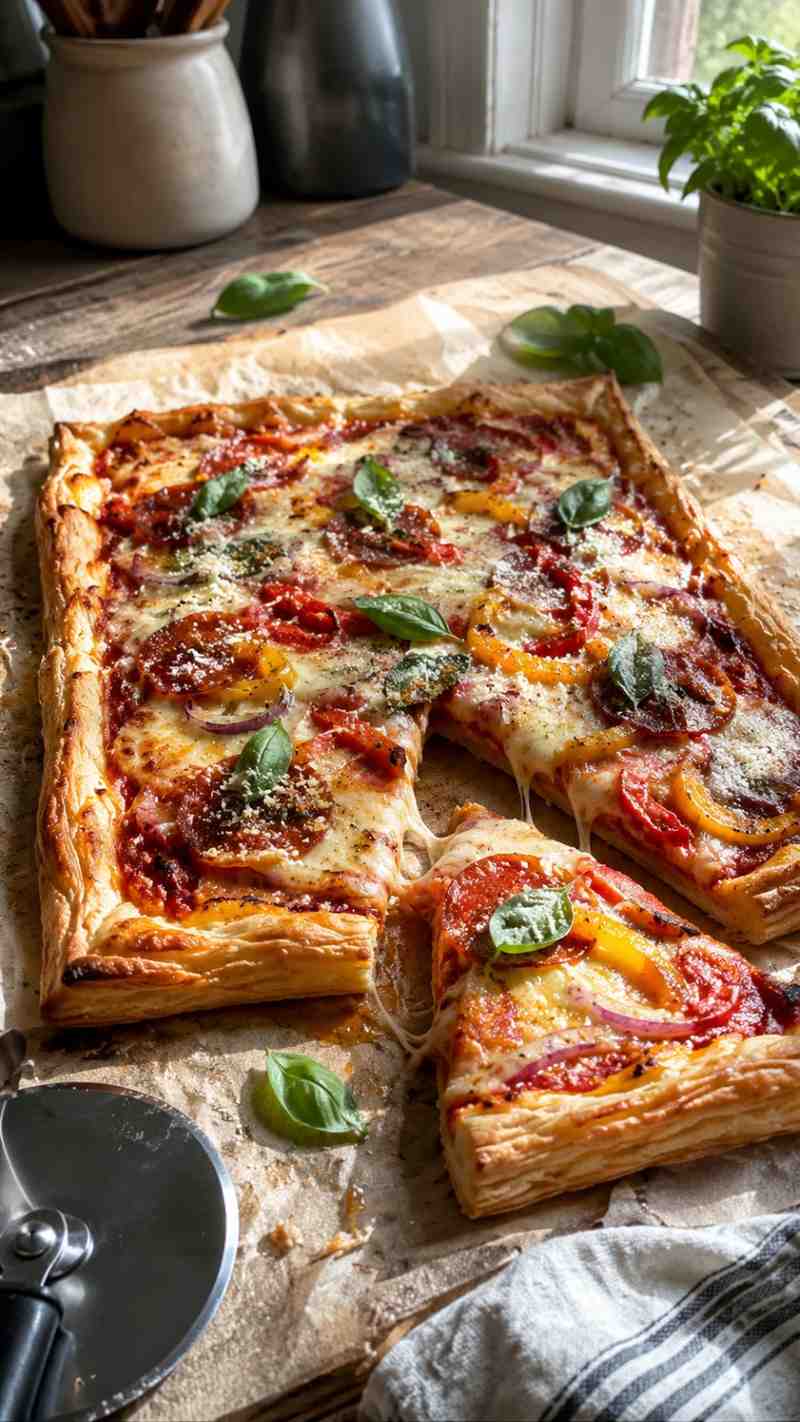
No yeast, no rising, no waiting around — a shatter-crisp, buttery-flaky pizza built on a sheet of puff pastry. Ready in about half an hour, including the ten minutes it sits in the oven by itself first.
Why I stopped making regular pizza dough on weeknights
For a while I was one of those people who kept a jar of pizza dough starter in the fridge, proud of myself every time I actually used it before it went sour. Then I had a week where I forgot to pull it out on time three nights in a row, ordered delivery instead, and got annoyed enough at myself to go looking for a workaround.
The workaround was already sitting in my freezer. I’d bought a box of puff pastry for a tart I never got around to making, and on a whim I unrolled a sheet, threw some sauce and cheese on it, and baked it like a pizza. The first attempt was a disaster — soggy in the middle, raw-tasting pastry under the toppings, nothing like the crisp, buttery thing I was picturing. But the idea was too good to give up on after one try.
A few attempts later I figured out the two things that were going wrong, and once I fixed those, this became the pizza I make more than any other on a weeknight. It doesn’t taste like a substitute for real pizza. It tastes like its own thing — thinner, flakier, a little more like a tart than a pizzeria pie — and my family stopped asking for delivery on the nights I make it.
Why this version actually works
Puff pastry is just butter and dough laminated into dozens of thin layers. In the oven, the water in the butter turns to steam and pushes those layers apart, which is what gives you that shattery, flaky texture. That process needs heat and it needs the layers to be free to move — both of which get shut down the moment you pile wet sauce and cheese on top of cold, unbaked pastry.
So the fix is simple: bake the pastry alone first, just until the border puffs and turns pale gold, then add the toppings and finish it in a second, shorter bake. This is basically the same logic behind blind-baking a tart shell, just borrowed for pizza.
Two smaller things matter almost as much. First, the pastry has to go into the oven cold — if it’s warm and soft, the butter starts melting out before it ever hits the oven, and you lose the layers before they’ve had a chance to puff. Second, keep the sauce thin and the toppings dry. Puff pastry doesn’t have the structure of a bread dough, so it can’t absorb much moisture before the bottom turns gummy.
Ingredient notes
Nothing unusual here — the ingredient list is short on purpose, since the pastry is doing most of the work.
Puff pastry
Look for an all-butter puff pastry if your store carries one — it browns better and tastes noticeably less greasy than versions made with shortening or margarine. Thaw it in the fridge overnight rather than on the counter, so it stays cold and firm right up until it goes in the oven.
Sauce
Use less than you think you need, and let it drain in a fine-mesh strainer for a few minutes if it looks watery. A thick, well-drained layer beats a generous, wet one every time here.
Cheese and toppings
Low-moisture mozzarella (the block kind you shred yourself) works better than fresh mozzarella, which tends to release water as it melts. If you’re using vegetables like mushrooms or peppers, pat them dry with a paper towel first, or better, sauté them briefly beforehand to cook off some of their moisture.
Egg wash
Just a beaten egg, brushed only on the border. It’s what gives the edge that deep, glossy golden-brown color rather than a pale, flat one.
Equipment
A baking sheet, parchment paper, a fork for docking, a pastry brush for the egg wash, and a sharp knife or pizza cutter for slicing afterward. Nothing specialized.
Flaky Puff Pastry Pizza
Here’s the full recipe, written the way I actually make it — including the blind-bake step that keeps the crust flaky instead of soggy.
Flaky Puff Pastry Pizza
Serves 4 · Prep 10 min · Bake 20-22 min · Total 30 min
Ingredients
Method
-
Score and dock the pastry. Unfold the cold puff pastry onto a parchment-lined baking sheet. Score a border about 1 inch in from the edge with a knife, cutting only halfway through the dough, not all the way. Prick the center all over with a fork so it doesn’t puff up along with the border.
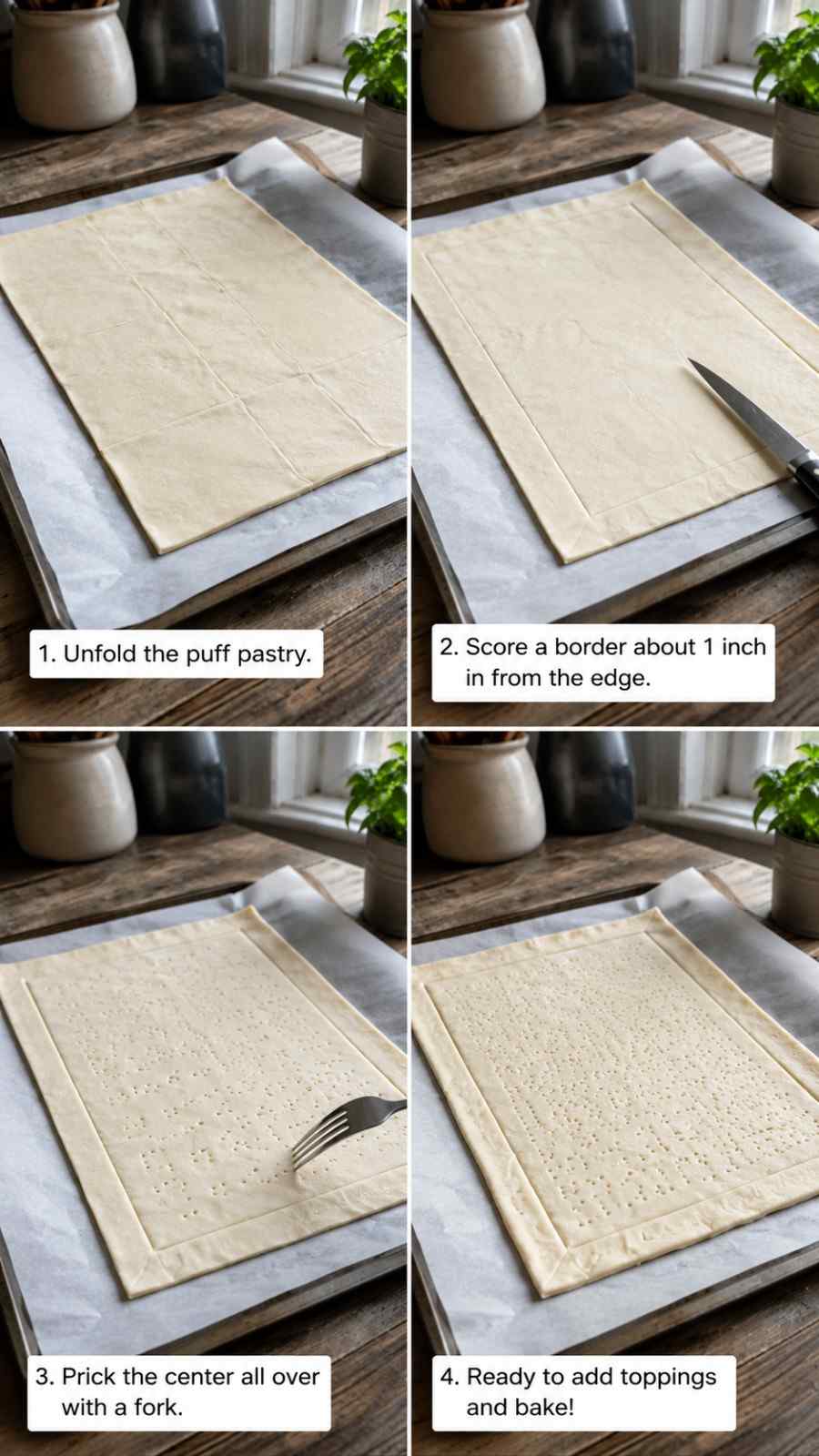 Score a border, then dock the center well so it stays flat.
-
Egg wash and blind bake. Brush just the scored border with beaten egg — keep it off the center so the middle doesn’t brown too fast. Bake at 425°F (220°C) for 8-10 minutes, until the border has puffed and turned pale gold.
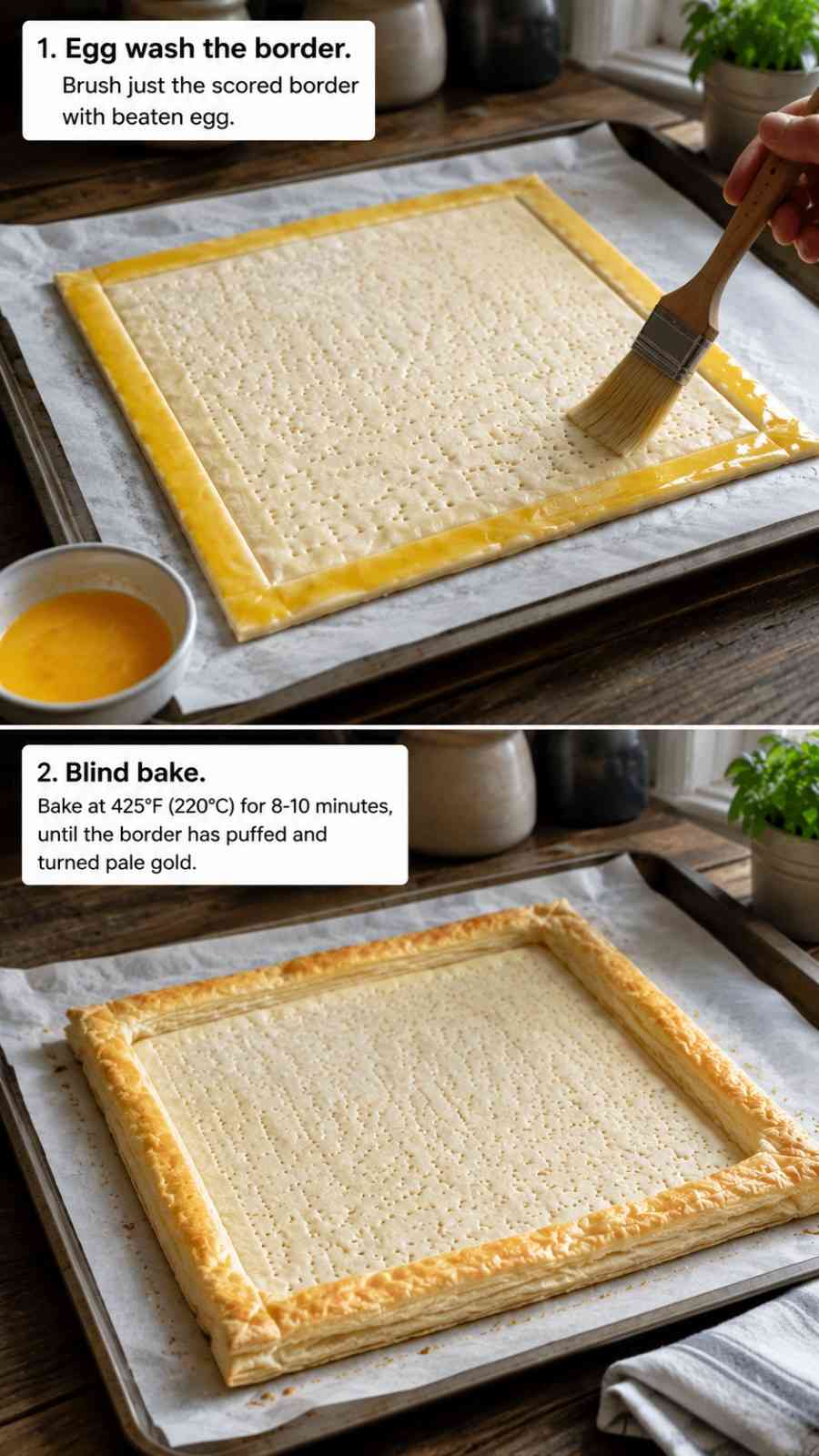
- Deflate the center if needed. If the middle puffed up anyway, gently press it back down with the back of a spoon, staying inside the scored line.
-
Top it. Mix the sauce with garlic powder and oregano, then spread a thin layer inside the border. Scatter mozzarella and Parmesan over the sauce, then add your toppings, keeping everything inside the scored line.
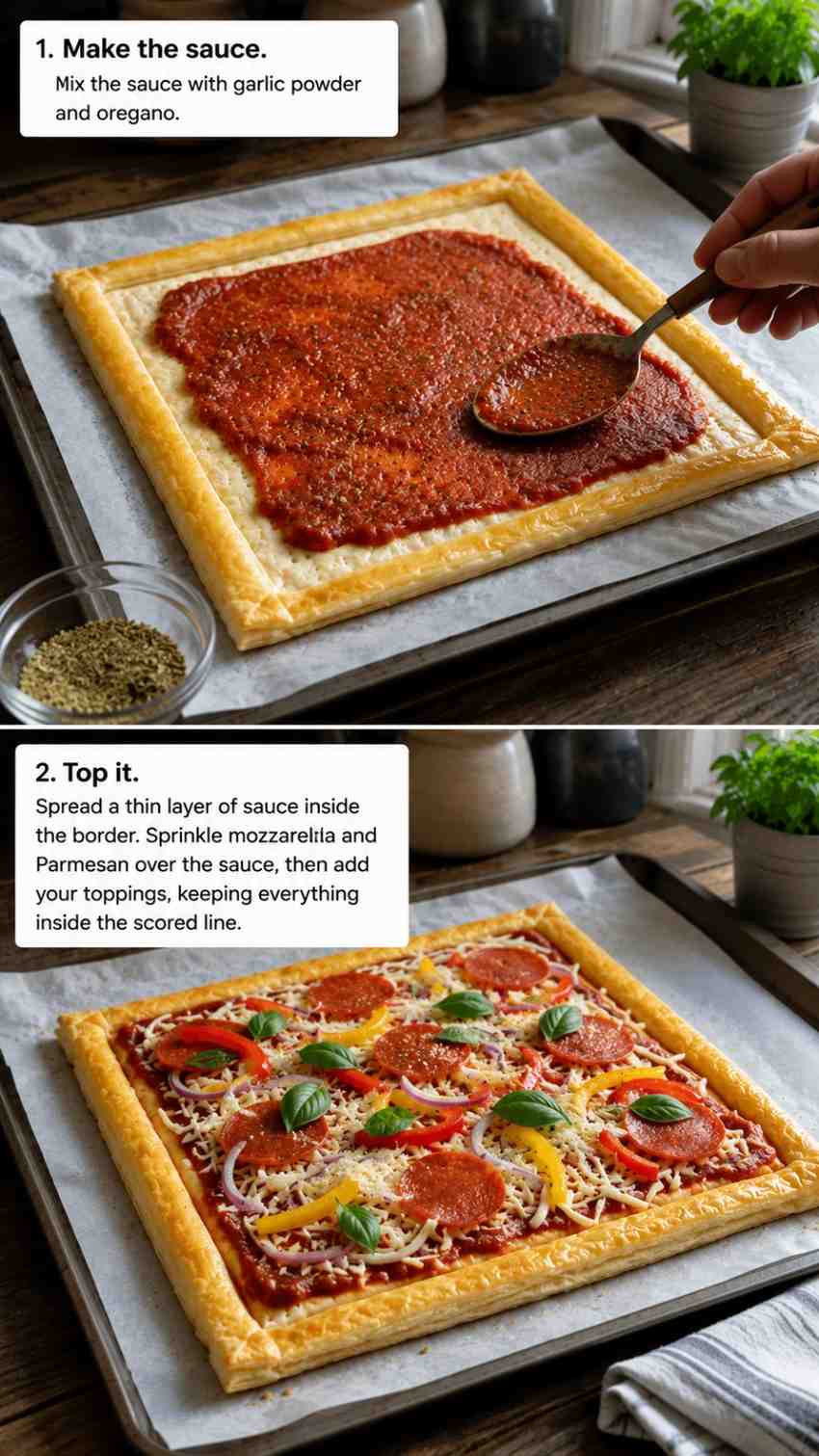
- Finish baking. Return to the oven for 10-12 minutes, until the cheese is bubbling and the border is a deep golden brown.
-
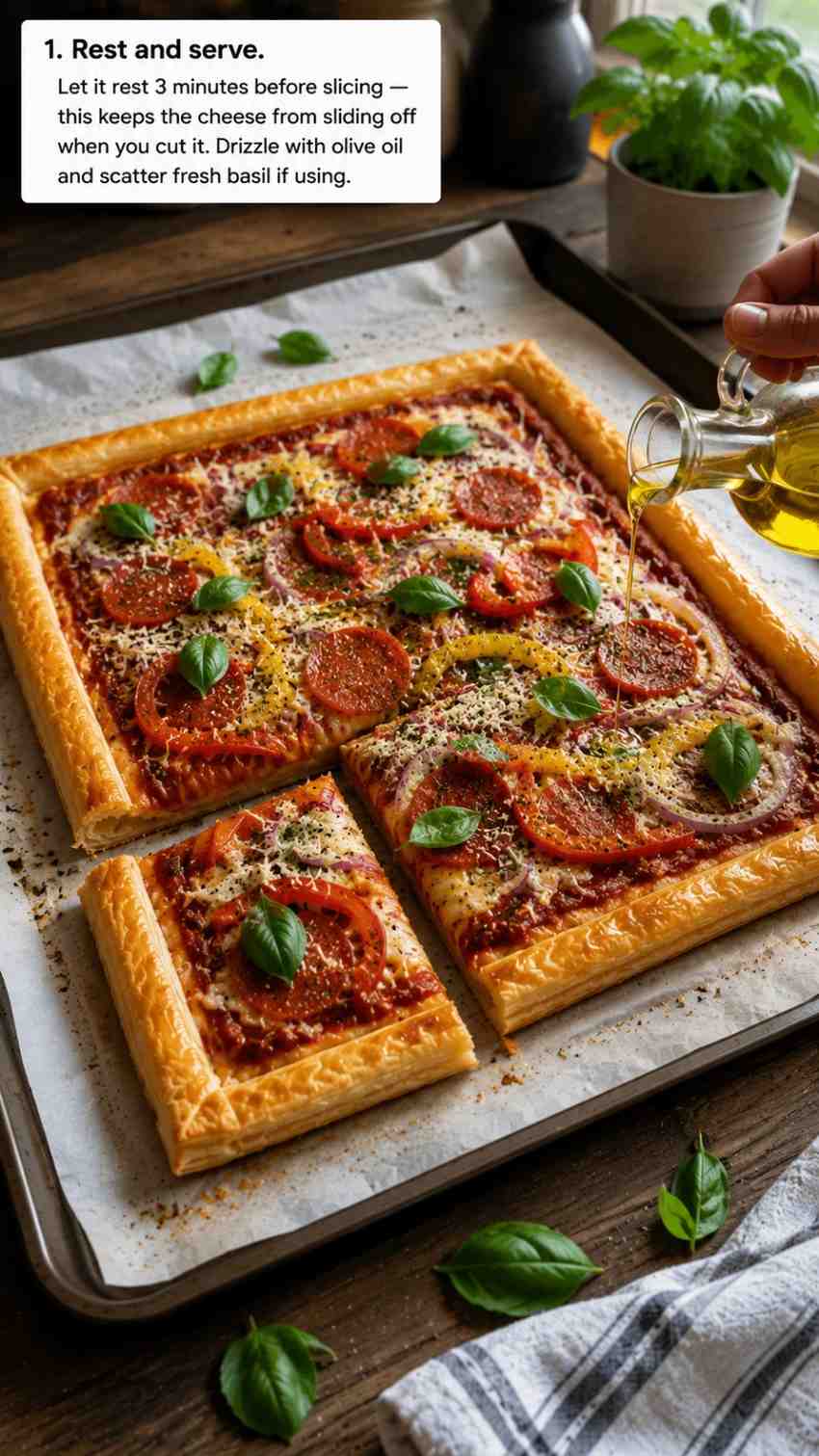
Rest and serve. Let it rest 3 minutes before slicing — this keeps the cheese from sliding off when you cut it. Drizzle with olive oil and scatter fresh basil if using.
Tips for success
What I’ve learned over enough attempts to have opinions about it:
- Keep the pastry cold until it hits the oven. If it’s gone soft and floppy on the counter, put it back in the fridge for 10 minutes before you dock and score it.
- Don’t skip the blind bake. It’s the one step that actually makes this “flaky puff pastry pizza” instead of “soggy pastry with toppings.”
- Go easier on the sauce than feels natural. A thin layer, well-drained, is the difference between a crisp bottom and a gummy one.
- Pat wet toppings dry. Mushrooms, thawed spinach, and fresh tomatoes are the usual culprits behind a soggy center.
- Use a hot oven. 425°F is what gets the layers puffing before the butter has time to just melt out flat.
Variations
Once you’ve got the base method down, it’s an easy one to riff on.
- White pizza: Swap the tomato sauce for a thin layer of ricotta mixed with a little garlic and lemon zest.
- Pesto version: Use pesto instead of marinara, and go even lighter with it since it’s more concentrated.
- Fig and prosciutto: A few thin fig slices, torn prosciutto, and goat cheese added after baking rather than before.
- Breakfast version: Cooked bacon or sausage, cheese, and a cracked egg added for the last 6-7 minutes of the second bake.
- Individual pizzas: Cut the sheet into 4 rectangles before scoring and docking, for personal-sized portions with more flaky edge per slice.
Storage and make-ahead
This one’s best eaten the day it’s made — that’s true of most puff pastry, since it loses its crispness as it sits. That said, a couple of things can be done ahead if you’re planning around a busy evening.
You can blind bake the crust (through step 3) a few hours ahead and leave it, loosely covered, at room temperature. Top and finish baking closer to when you actually want to eat. Leftovers keep in the fridge for a day or two — reheat in a 375°F oven or an air fryer for a few minutes to bring back some crispness. The microwave will make it chewy instead of flaky, so it’s worth the extra few minutes in the oven.
What to serve alongside it
- A simple arugula salad with lemon and olive oil, to cut through the richness of the pastry.
- Roasted or blistered cherry tomatoes on the side, if you kept the sauce light and want more tomato flavor.
- A cold glass of something crisp — this pairs well with the same kind of drink you’d have with a quiche or tart.
Frequently asked questions
Why is my puff pastry pizza soggy in the middle?
Almost always too much sauce, watery toppings, or skipping the blind bake. Drain the sauce, pat wet toppings dry, and always pre-bake the crust before adding anything on top.
Do I have to blind bake the crust first?
Yes, for this method. Puff pastry needs a head start in the oven on its own, or the weight and moisture of the toppings stop the layers from puffing and it bakes flat and pale instead of flaky.
Can I use homemade puff pastry?
Yes, if you have a batch on hand. Just make sure it’s cold when it goes into the oven, the same as store-bought, since warm butter in the dough is what keeps the layers from puffing properly.
Can I make this ahead of time?
You can blind bake the crust a few hours ahead and leave it at room temperature, then top and finish baking closer to serving. Fully assembled and baked, it’s best eaten the same day.
Can I make this gluten-free?
Some brands make a gluten-free puff pastry, though the texture tends to be a bit less flaky than the wheat version. The same scoring, docking, and blind-bake method still applies.