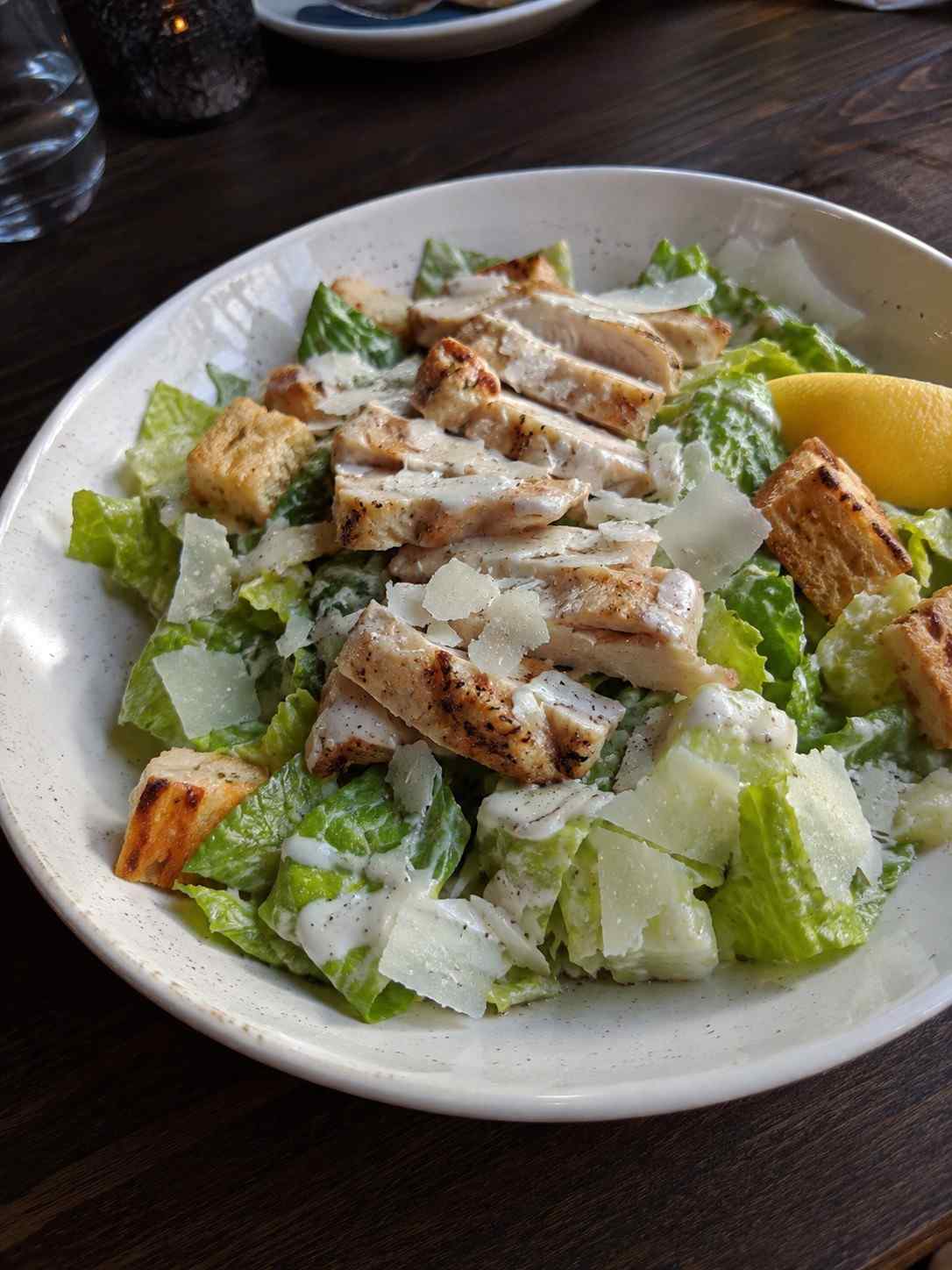
Crisp romaine, juicy pan-seared chicken, real croutons, and a dressing that doesn’t come from a bottle. This is the version I actually make on a Tuesday, not the one I photograph for a magazine.
Why I keep making this salad
I used to think Caesar salad was a restaurant thing. The kind of dish a server rolls up on a cart and tosses tableside with a flourish, or the sad, wilted version that comes free with a sandwich combo and gets pushed to the side of the plate. It never occurred to me that it was something I could make at home, mostly because every recipe I’d flipped past made it look complicated — raw egg yolks, anchovies, a whisk in one hand and a slow drizzle of oil in the other, like some kind of kitchen chemistry exam.
Then a friend who cooked professionally for a few years showed me how she made it on a random Wednesday, using ingredients she already had in the fridge, and it took her about fifteen minutes from start to finish. No cart, no flourish, just a mixing bowl and a good knife. That was the moment the dish stopped being intimidating and started being dinner.
This is the version I’ve landed on after making it more times than I can count, including a stretch a couple of summers ago where I made it almost every week because it was hot, I didn’t want to turn the oven on for long, and leftover rotisserie chicken from the grocery store kept ending up in my cart. Some weeks the chicken is pan-seared and warm off the skillet. Other weeks it’s cold, shredded, and thrown in straight from a container in the fridge. Both work. That flexibility is part of why this recipe has stuck around in my rotation longer than almost anything else I cook.
What I want to give you here isn’t a museum-piece version of Caesar salad. It’s the one that holds up on a Tuesday, that doesn’t need a trip to a specialty store, and that still tastes like something worth bragging about a little.
Why this version actually works
There are a few small decisions in this recipe that matter more than they look like they should. None of them are complicated, but skipping them is usually why homemade Caesar salad ends up tasting flat compared to the restaurant version.
First, the dressing is emulsified, not just stirred together. That means the oil and the egg yolk are combined slowly enough that they bind into something creamy instead of separating into a puddle of oil sitting on top of watery garlic and lemon juice. It takes maybe ninety extra seconds of whisking. That’s the whole trick.
Second, the chicken is seasoned and rested properly. A lot of home versions of this salad use chicken that’s either bland because it was cooked with nothing but salt, or dry because it went straight from the pan onto the lettuce with no rest. Both of those are easy fixes, and I’ll walk through exactly how to avoid them below.
Third — and this is the one people skip most often — the croutons are made from actual bread, toasted in the oven with olive oil and garlic, not poured out of a plastic bag. I know that sounds like an unnecessary extra step on a weeknight, but it takes ten minutes and it’s genuinely the difference between a salad that tastes homemade and one that tastes like it’s trying to be a fast food knockoff.
Ingredient notes
Here’s a closer look at what goes into this dish and why, along with a few substitutions if you’re missing something or just don’t feel like a trip to the store.
Chicken
Boneless, skinless chicken breasts are the standard choice because they cook fast and slice cleanly, but chicken thighs work too and honestly have a bit more forgiveness if you overcook them slightly. If you have leftover rotisserie chicken, shred or slice about three cups of meat and skip the searing step entirely — it’s a completely legitimate shortcut, not a cheat.
Romaine lettuce
Romaine is the traditional choice for a reason: it has a sturdy rib that holds up under a heavier dressing without going limp the way softer lettuces do. Look for tight, pale-green hearts rather than the darker, looser outer leaves, which tend to be more bitter and less crisp. Wash and spin the leaves completely dry before dressing — this matters more than people think, because water left on the leaves dilutes the dressing and keeps it from clinging properly.
Anchovies
I know this is the ingredient that makes people hesitate, but I’d genuinely encourage you not to skip it. Anchovy fillets don’t make the salad taste fishy; they dissolve into the dressing and give it a deep, savory backbone that’s very hard to replicate any other way. If you truly can’t get past the idea of it, anchovy paste works as a substitute, or you can use a splash of extra Worcestershire sauce, which contains anchovies in a much more diluted, familiar form.
Parmesan
Use a block of parmesan and grate it yourself if you can. Pre-shredded parmesan is coated with anti-caking agents that keep it from melting or blending smoothly into the dressing, and the flavor is noticeably duller. A microplane grater turns a chunk of parmesan into fine, fluffy shreds in about thirty seconds, so it’s not much extra work.
Bread for croutons
A sturdy, slightly stale loaf works best — sourdough, a baguette, or even a dense sandwich bread. Fresh, soft bread turns gummy in the oven instead of crisping up properly. If your bread is fresh, leave the cubes out on the counter uncovered for an hour before toasting to dry them out a bit.
Egg yolks
Traditional Caesar dressing uses raw egg yolk to help emulsify the oil, which gives the dressing its silky texture. If that’s a concern for you — and it’s a completely fair one, especially if you’re serving very young kids, pregnant guests, or anyone with a compromised immune system — use pasteurized eggs, which are widely available at most grocery stores, or substitute three tablespoons of good mayonnaise instead. Mayo is already an emulsion, so it does the same job with less effort and zero raw-egg concern.
Equipment
Nothing specialized here. You’ll want a large mixing bowl for tossing the salad, a medium bowl or jar for the dressing, a whisk, a sharp knife, a large skillet for the chicken, and a baking sheet for the croutons. A microplane or fine box grater for the parmesan makes life easier but isn’t strictly necessary.
Fresh Chicken Caesar Salad
Here’s the full recipe, written the way I actually make it — including the small order-of-operations choices that keep everything warm, crisp, and ready at the same time instead of one part getting cold while you finish another.
Fresh Chicken Caesar Salad
Serves 4 · Prep 20 min · Cook 15 min · Total 35 min
Ingredients
Method
-
Season the chicken. Pat the chicken breasts completely dry with paper towels, then season both sides generously with garlic powder, smoked paprika, salt, and pepper.

-
Make the croutons. Toss cubed bread with a tablespoon of olive oil, a pinch of garlic powder, and salt. Spread on a baking sheet and bake at 375°F (190°C) for 10-12 minutes, tossing once, until golden and crisp.

-
Sear the chicken. Heat 1 tablespoon olive oil in a skillet over medium-high heat. Add the chicken and cook 6-7 minutes per side, without moving it, until deeply golden and the internal temperature hits 165°F (74°C). Transfer to a plate and rest 5 minutes before slicing — this keeps the juices in instead of on your cutting board.

-
Build the dressing. In a bowl, whisk the egg yolks, mustard, minced anchovies, garlic, and lemon juice until combined. While whisking constantly, drizzle in the olive oil in a slow, thin stream until the mixture thickens and turns pale and creamy. Stir in the parmesan and Worcestershire sauce, then season with black pepper.

- Toss the salad. Add the chopped romaine to a large bowl and pour over about three-quarters of the dressing. Toss thoroughly, adding more dressing to taste.
-
Assemble and serve. Divide the dressed lettuce among plates or bowls, top with the sliced warm chicken, croutons, and shaved parmesan. Serve immediately, while the chicken is still warm and the croutons are still crisp.

Tips for success
A few things I’ve learned the hard way over the years of making this on repeat:
- Dry your lettuce completely. Any leftover water on the leaves will thin out the dressing and stop it from clinging properly. A salad spinner is worth owning if you make salads often; if you don’t have one, a clean kitchen towel works almost as well.
- Don’t crowd the chicken in the pan. If your skillet is small, cook the chicken breasts one at a time. Crowding the pan drops the temperature and steams the chicken instead of searing it, which means you lose that golden crust.
- Rest the chicken before slicing. Five minutes is enough. Cutting into it immediately lets the juices run out onto the board instead of staying in the meat.
- Add the dressing gradually. Start with three-quarters of it, toss, and taste before adding more. It’s easy to add extra dressing but impossible to take it back out once the lettuce is drenched.
- Salt the dressing last. Between the anchovies, parmesan, and Worcestershire sauce, this dressing already carries a fair amount of salt. Taste before reaching for the shaker.
Variations
Once you’ve made the base recipe a couple of times, it’s an easy one to bend in different directions depending on what you have on hand or what you’re in the mood for.
- Grilled chicken Caesar: Swap the pan-seared chicken for grilled chicken breast or thighs. The char adds a smokiness that plays really well against the sharp, garlicky dressing.
- Blackened chicken Caesar: Coat the chicken in blackening seasoning instead of the garlic-paprika rub for a spicier, more assertive version.
- Shrimp Caesar: Replace the chicken with a pound of large shrimp, sautéed for 2-3 minutes per side until pink and just cooked through.
- Kale Caesar: Substitute lacinato (dinosaur) kale for half or all of the romaine. Massage the leaves with a little olive oil first to soften them before adding the dressing.
- Light version: Use Greek yogurt in place of half the olive oil in the dressing for a lighter, tangier take that’s still creamy.
- Wrap it up: Leftover salad, chicken and all, makes an excellent wrap the next day — just tuck it into a large tortilla with a bit of extra dressing.
Storage and make-ahead
The individual components of this salad hold up in the fridge far better than the assembled dish, so if you’re planning ahead, it’s worth storing everything separately.
The dressing keeps in an airtight container in the fridge for up to four days. The flavor actually deepens a little after the first day, as the garlic and anchovy mellow into the oil. The cooked chicken keeps for three to four days refrigerated, and can be eaten cold or reheated gently. Croutons will stay crisp for two to three days if kept in a sealed container at room temperature — don’t refrigerate them, since the moisture in the fridge will soften them.
Once the salad is fully assembled and dressed, it doesn’t keep well. The lettuce wilts within a couple of hours and the croutons lose their crunch almost immediately. If you want leftovers, dress only what you’ll eat that day and store the rest of the lettuce, dressing, chicken, and croutons separately, then assemble again when you’re ready to eat.
What to serve alongside it
On its own, this salad is filling enough to work as a full meal, especially with the chicken added. But if you want to round it out into more of a spread, a few things pair naturally:
- A warm, crusty piece of garlic bread, since there’s already garlic in the dressing and it doesn’t clash.
- A light tomato or minestrone soup for a soup-and-salad combination.
- Roasted or grilled vegetables, like asparagus or zucchini, for extra color and a lighter side.
- A chilled glass of a crisp white wine, such as a Sauvignon Blanc, if you’re serving this for a dinner rather than a quick lunch.
Frequently asked questions
Can I make chicken Caesar salad without anchovies?
You can, though the dressing will taste noticeably flatter and less complex. If you want to skip whole anchovy fillets but still get some of that savory depth, a teaspoon of fish sauce or an extra splash of Worcestershire sauce will get you part of the way there.
Is it safe to eat raw egg yolk in Caesar dressing?
Traditional Caesar dressing uses raw or lightly coddled egg yolk to help emulsify the oil. For most healthy adults, this is a low-risk, widely accepted practice, but if you’re pregnant, elderly, immunocompromised, or serving young children, it’s safer to use pasteurized eggs, which are sold specifically for this purpose, or to substitute mayonnaise, as noted in the ingredients section above.
How do I keep the croutons from going soggy?
The main trick is timing: only dress the amount of salad you’re going to eat right away, and add the croutons at the very last step, right before serving. Croutons that sit in dressed lettuce for more than a few minutes will start to soften.
Can I use grilled chicken instead of pan-seared?
Yes, and it’s a great substitution. Grilling adds a smokiness that works well against the sharp, garlicky dressing. Just keep an eye on the internal temperature so the chicken doesn’t overcook and dry out on the grill.
What can I use instead of romaine lettuce?
Little gem lettuce is a great substitute and is actually closer in texture to what’s used in a lot of restaurants. Kale, as mentioned in the variations section, also works if you massage it first. Iceberg lettuce can work in a pinch for crunch, though it has less flavor.
Can I make this salad ahead of time for a party?
Prep all the individual components — cook and slice the chicken, make the dressing, toast the croutons, wash and chop the lettuce — up to a day ahead and store them separately in the fridge (croutons at room temperature). Assemble and dress the salad right before serving so nothing wilts or goes soggy.
How many calories are in a serving of chicken Caesar salad?
This recipe comes out to roughly 480 calories per serving, based on four servings total, including the chicken, dressing, croutons, and parmesan. That number will shift depending on how much dressing and cheese you use.